TL;DR
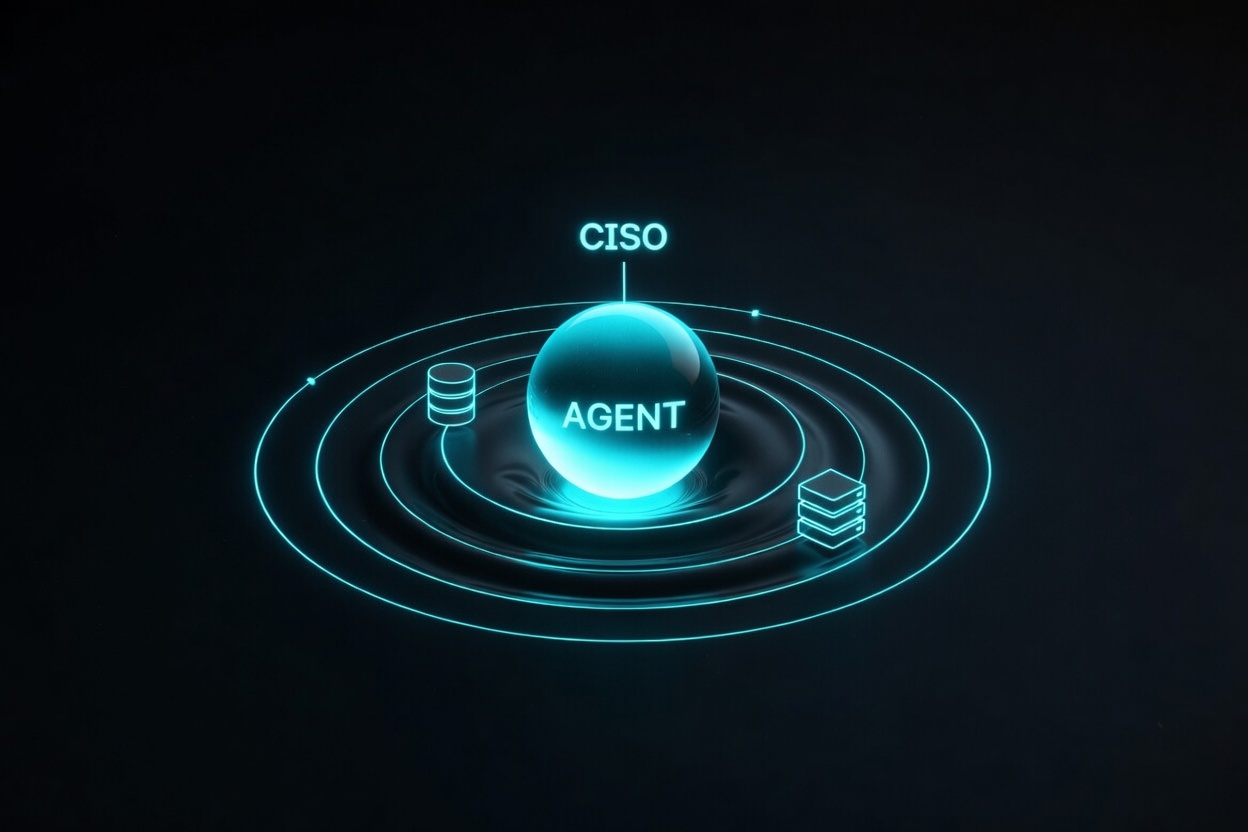
- •The CISO used to protect the perimeter. Now they govern autonomous decision-makers operating inside it.
- •Agents have credentials, session tokens, and production access. They aren't users. There's no HR file, no onboarding, no offboarding.
- •Blast radius mapping, reasoning-trace audit logs, and vendor risk for MCP servers are all new jobs with no standard questionnaires yet.
- •Classic incident response assumes a human did something. An agent executing 4,000 actions per minute before anyone notices is a different category.
- •The CISOs who figure out Human-In-The-Loop architecture as a security primitive become strategic. The ones who don't become the blocker everyone works around.
I don't envy CISOs right now. Their job in 2026 isn't on any job description I've seen. Here's what it actually looks like in practice.
Identity & Access for Non-Human Agents
Agents aren't users. They don't have HR files. But they have credentials, session tokens, and access to production data. The CISO has to build an identity layer for things that have never had one.
I've personally done research on this trying to manage my own agent swarm and all their logins. It's frankly the part I hate most about running agents. If I could have a Login Central product that solved that, it would make everything faster. I'm constantly sure there are better ways to solve central logins. If you know one, please advise.
Blast Radius Mapping
Every agent that can execute code, call an API, or write to a database is a potential incident. The CISO has to map it: if this agent goes wrong, what does it touch?
Permissions scoped to the task, not the user, is the policy answer. Enforcing it at the infrastructure level is the CISO's job.
Audit Trails That Actually Work
Transparent reasoning the operator can audit requires logs that are legible to humans after the fact. Not just API call logs. Reasoning traces. Decision chains.
SOC2 and ISO27001 reviewers are already asking for these. Nobody has a clean template yet.
Vendor Risk for Every MCP Server
When your product integrates 12 MCP servers, each one is a third-party risk vector. The CISO now has to run vendor assessments on tools that didn't exist 18 months ago, with no standardized security questionnaire.
I don't envy them. They get all the negativity from colleagues who want to deploy agents fast. But trust needs a CISO. Fair enough.
Data Governance for Agent Memory
Agents that remember context across sessions are storing data somewhere. Where? For how long? Under what retention policy? GDPR doesn't care that it's an agent. The CISO does. Or should.
Incident Response Redesign
Classic IR assumes a human did something. An agent executing 4,000 actions per minute before someone notices is a different category of incident. Playbooks need rewriting from scratch.
Board-Level Communication
The CISO in an agent-era transition has to translate agent risk into language a board understands. Without catastrophizing it into 'we can't ship' or minimizing it into 'we've got it handled.' That's harder than the technical work.
The bottom line
The CISO used to protect the perimeter. Now they have to govern autonomous decision-makers operating inside it.
The ones who figure out Human-In-The-Loop architecture as a security primitive, not a UX feature, are the ones who become strategic. The ones who don't become the blocker everyone works around. Ouch.