
TL;DR
- •Founders are the best salespeople until PMF is locked — nobody handles objections with your depth.
- •Your first 50 customers come from signal-based outbound, not inbound or hiring SDRs.
- •Build the right stack with automation from day one — don't pay €6K/month for a human to copy-paste between tabs.
- •Hire sales only after you can write the ICP, the messaging, the objections, and the cycle length on a napkin.
You just raised your seed round. The board wants revenue. Your instinct is to hire 2 SDRs, 2 account executives, even a head of sales or marketing. Don't. Not yet.
Why Founders Should Sell First
Nobody understands the problem you're solving better than you. Nobody can handle objections with the same depth. And nobody else can feed product insights directly back to engineering in real time. Founder-led sales isn't a compromise — it's a strategic advantage.
Lovable hit $80M ARR in 7 months with 35 people. The founders stayed in every deal. Elena Verna calls this the era of the AI-native employee — one person who defaults to AI for everything, builds instead of delegating, ships instead of planning. That's you. The founder who sells is the founder who builds the right product.
A junior SDR costs €4,600-€6,000/month in Germany or $6,750-$9,000/month in the US. They need 3-6 months to ramp. Average tenure: 14-18 months. By the time they're productive, they're already thinking about their next role. You don't need that right now. You need a system and 30 minutes a day.
The Founder Stack: Automation, Not Manual Labor
Let me be blunt about something I've seen too many times: funded founders manually copying prospects from Clay into HubSpot. Or worse — paying an SDR €4,600-€6,000/month to do it. That's not scrappy. That's insane.
You raised money. You have budget. Use it on the right things. The stack:
- •HubSpot (Starter or higher): Your CRM. Track every conversation, every deal, every objection. You'll need this data when you hire — and you need CRM sync working from day one.
- •Apollo ($49/month): Find decision-makers at your target accounts. 275M+ contacts. Export emails and phone numbers.
- •Clay ($349-$800/month): Signal detection, enrichment, and the engine that feeds your CRM automatically. Don't cheap out on the tier without CRM sync. The whole point is that Clay pushes enriched prospects into HubSpot without anyone copy-pasting.
- •An AI agent (n8n + Claude API): Build a workflow that takes Clay signals, drafts personalized outreach, and routes it for your review. This replaces the SDR doing manual research at €6K/month. The agent costs under €100/month and runs 24/7.
- •LinkedIn (Sales Navigator at $80/month): Your outbound channel. Connection requests, DMs, content. Worth every cent if you do this daily.
- •Claude Max ($100/month) for the founder: You're drafting outreach, researching accounts, prepping for calls, building agents. The Pro tier at $20/month is fine for team members. But you're the one doing the heavy lifting — don't bottleneck yourself on AI usage limits.
Is this more than $300/month? Yes. And that's the point. You're not saving pennies — you're a funded founder, not a bootstrapped side project. You're spending $500-$1,000/month on tools that replace a $6K/month human doing copy-paste work. The math isn't even close.
I've watched companies hire SDRs at €55K-€73K/year to manually enrich leads, copy data between tabs, and write generic outreach. Then they wonder why pipeline doesn't move. The SDR isn't the problem — the job description is. No human living after 2026 should spend 70% of their time on tasks an agent handles in seconds.
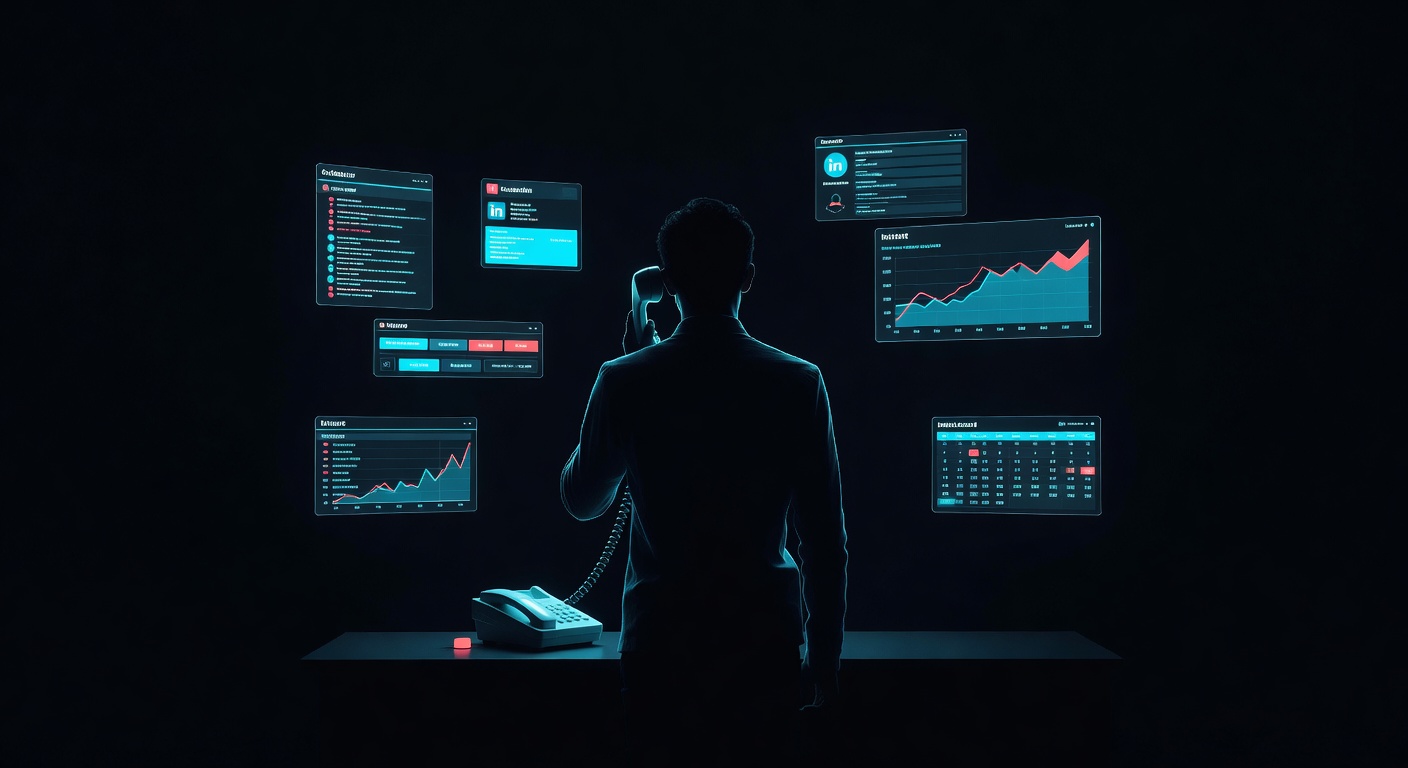
The 90-Minute Daily System
Block 90 minutes every morning. Treat it like product development — because it is. Here's the breakdown:
- •Minutes 1-30: Check Clay for new signals. Who raised money? Who hired a new VP? Who posted a job for the role your product replaces? Pick the 3-5 strongest signals.
- •Minutes 30-60: Write personalized outreach for each. Build a Claude skill with your voice, your company context, and your ICP — then use it to draft messages that sound like you, not like AI. Each message should reference the specific signal. Not "I noticed your company." Send via LinkedIn DM or email.
- •Minutes 60-90: Follow up on yesterday's conversations. Reply to DMs. Book calls. Update HubSpot with notes from every interaction. This data is gold — it tells you what's working.
That's it. 90 minutes. 3-5 personalized touchpoints per day. 15-25 per week. At a 10-15% reply rate (signal-based, not spray-and-pray), that's 2-4 conversations per week. In 90 days, you've talked to 25-50 qualified prospects.
What Founder Outbound Actually Sounds Like
Most founder outbound sounds like this:
"Hi, I'm the CEO of [startup]. We help B2B SaaS companies scale their outbound. I'd love to schedule a call to show you how we can help your team."
Nobody replies to this. It's about you, not them. It's a pitch disguised as a handshake. Signal-based founder outbound follows a different structure: spot the signal, name their problem, offer to show.
Here's what that looks like in practice:
Signal: they just raised a seed round and are posting SDR job openings.
"Hey [Name], congrats on the raise. Saw the SDR openings — usually at this stage, founders are trying to build pipeline fast without burning through the round on headcount that takes 3-6 months to ramp. Is that hitting close to home?"
Signal: Series A company with a growing sales team but flat pipeline.
"Hey [Name], three things I see in Series A companies right now: SDRs spending 70% of their time on manual research, CRM data that's always stale, and outbound that sounds like everyone else's. I help founders build AI agents that handle the first two so your team can focus on conversations. Interested to see how?"
Signal: founder posting on LinkedIn about outbound struggles.
"Hey [Name], saw your post about outbound not converting. Most founders I work with hit the same wall — the messaging is fine, the infrastructure is broken. No signal detection, no enrichment, manual everything. I build the GTM system so founders can do 30 minutes of outbound and get the output of a 3-person team. Want me to share what's working?"
See the pattern? Every message does three things: references something specific about them, names the problem they're likely dealing with, and offers to help — not to pitch. No "I'd love to pick your brain." No "exploring synergies." You show up knowing what they're struggling with because the signal told you.
That's what founders can do that SDRs can't. You understand the problem at a depth no hired rep will match. When you name someone's pain in the first two sentences, you're not cold-calling — you're proving you get it.
The 5 Things You Must Know Before You Hire
You're ready to hire your first sales rep when you can write these five things on a napkin:
- •Your ICP: Not "B2B SaaS companies." Specific. "Series A-B SaaS in DACH, 20-100 employees, selling to sales teams, using HubSpot." Three firmographic + two behavioral criteria.
- •The messaging that converts: Which subject lines get opens? Which first lines get replies? Which value props create urgency? You need data, not guesses.
- •The top 5 objections and how to handle each one: "We're not ready," "We built something internal," "Your competitor is cheaper." If you can't rattle these off, you haven't sold enough.
- •Your average sales cycle: Is it 14 days or 90 days? If you don't know, you can't forecast. And if you can't forecast, you can't set quota for a hire.
- •Your close rate: What percentage of first calls become customers? If it's under 15%, your problem is qualification, not sales capacity.
If you can't answer all five, you're not ready to hire. Could you bring in a discovery expert or sales consultant to train you? Sure. But that's a significant cost, and they can teach you the frameworks — they can't build your systems. You still need the CRM, the automation, the signal detection, the outreach engine. Training without infrastructure is just expensive theory.
Every deal you close yourself teaches you something a hire never will. Once you have these five locked, you hand over a system — not a hope.
What This Means For Your Business
If you're a pre-Series A founder doing outbound with a spreadsheet and cold LinkedIn DMs, you're leaving pipeline on the table. Not because you're bad at sales — because you're doing it without signals, without a system, and without the tools that make 30 minutes feel like 3 hours of output.
This is exactly what I help founders set up. Not a 6-month consulting engagement — a few sessions to build the system, pick the right signals for your market, and get the stack running. Then you run it. 90 minutes a day.
Your first 50 customers are a product development exercise disguised as sales.