
TL;DR
- •An SDR’s day is 70% data work, 30% conversations. An agent flips that ratio for the humans on your team.
- •Agents handle signals, enrichment, first drafts, CRM updates, and sequence management. Humans handle calls, discovery, objections, and closing.
- •Conversation intelligence (Jamie/Granola for startups, Gong for enterprise) is what turns calls into data the whole system learns from.
- •The question isn’t hire or automate. It’s: which tasks are you paying a human salary for that don’t need a human?
When IKEA launched their AI chatbot Billie, it handled 47% of customer service inquiries overnight. Most companies would have laid off half the team and called it efficiency. IKEA retrained 8,500 customer service reps into interior design consultants instead. The result: $1.4 billion in additional revenue.
That’s the part everyone gets wrong about AI and sales. If you’re only looking at cost savings — how many SDRs can I cut? — you’re limiting yourself. The real question is: what could those people do if you took the busywork off their plate? What revenue are you leaving on the table because your best people spend 70% of their day on tasks a machine handles better?
The "SDR vs. AI agent" debate is framed wrong. It’s not a competition. It’s a division of labor. Let me show you what each actually does, hour by hour.
A Typical SDR Day (Without Agents)
I’ve sat next to SDRs. I’ve been one. Here’s what a typical day actually looks like:
- •8:30–9:00 — Read emails, Slack, internal chat. Check which accounts need attention. Scan what came in overnight.
- •9:00–9:45 — Call the inbound leads that were assigned to you. These are the good calls — the prospect filled out a form, they want to talk. Maybe 2–3 calls, 20–30 minutes each if you’re lucky. This is the best part of the day.
- •9:45–10:30 — Follow up on old inbounds. The ones who went quiet after the first call. The demo that didn’t convert. The “let me check with my team” from last week. Chase, chase, chase.
- •10:30–11:00 — Research for outbound. Open Clay or LinkedIn. Read funding announcements, job posts, company news. Fall down a rabbit hole on one account for 30 minutes.
- •11:00–11:30 — Pipeline review with manager. Go through activity numbers — 40 calls, 12 emails, 2 meetings booked. None of these numbers tell you anything real. Calls are vanity. Meetings booked that week are random. But that’s what the review is built around. Manager says: more activities, more activities.
- •11:30–12:00 — Write outreach emails. Copy prospect data into HubSpot. Fix a duplicate contact. Try to make each email “personal.”
- •13:00–14:00 — More research. More emails. Update CRM notes from the morning calls. LinkedIn connection requests. Maybe get 2 replies from yesterday’s batch.
- •14:00–15:00 — Finally, outbound calls. Maybe 1 hour of actual dialing after the whole day of everything else. 3 voicemails. 1 gatekeeper. 1 “not interested.” Most calls last under 15 seconds.
- •15:00–16:30 — Follow-ups, activity report, update HubSpot. Book 1 meeting if it’s a good day.
Total outbound calling: maybe 1 hour. Total real conversations: the 2–3 inbound calls in the morning. Everything else is research, data entry, CRM admin, and getting hung up on. And the outbound calls they did make? Probably not to the highest-signal accounts — because nobody surfaced which accounts are showing intent right now.
The Same Day With an Agent Stack
Now imagine the agent handles everything that doesn’t need a voice:
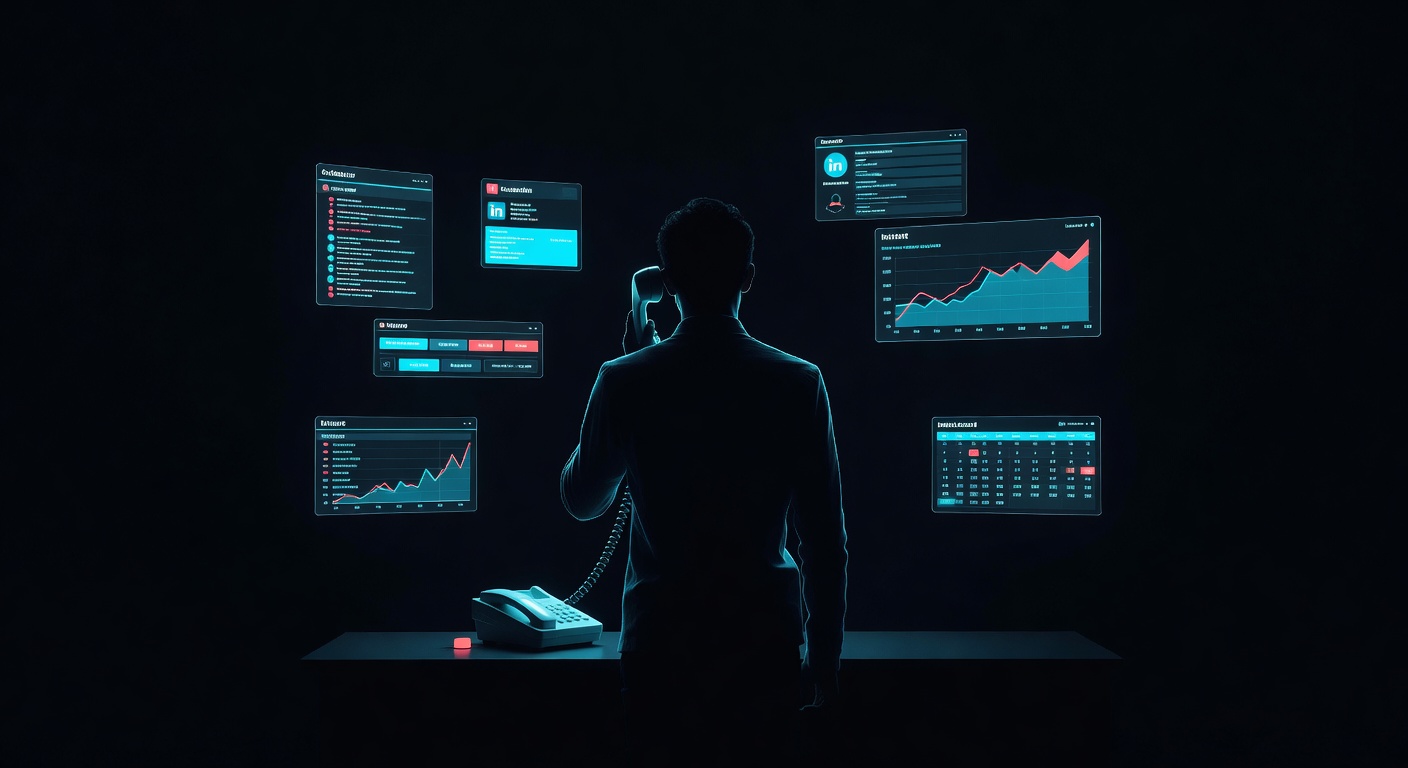
- •Clay monitors your ICP 24/7. Funding round detected at 2am? By 8am it’s enriched with the right contact, their LinkedIn, company context, and the signal that triggered it.
- •n8n picks it up: enrich → score → draft outreach → push to HubSpot as a task on the contact record. The SDR opens HubSpot in the morning and sees: “New signal: Series A at [Company]. Draft ready. Review and send.”
- •Claude writes the draft — but not from scratch every time. You feed it 10–20 of your best-performing messages as examples. Your voice, your tone, your way of opening. The AI doesn’t invent a style — it mirrors yours. The SDR reads the draft, tweaks a line or two, hits send. Two minutes per message instead of fifteen.
- •Apollo provides the phone number. Instantly handles email delivery with warm-up and rotation.
- •HubSpot tracks every touchpoint. When a prospect opens 3 emails and visits the pricing page, the SDR gets a notification — that’s the signal to call.
So where does the draft live? In HubSpot, as a task on the contact record. The SDR’s morning routine: open task queue, review drafts, edit for voice, send, then pick up the phone for the accounts showing the strongest engagement. Research rabbit holes and copy-pasting between tabs just gave way to actual conversations.
One warning: the agent is only as good as the ICP you feed it. If you tell Clay to target “founders in San Francisco” with no signal, no fit criteria, no context — you’ll get beautifully written messages to people who have nothing to do with what you sell. AI doesn’t fix bad targeting. It scales it.
What Agents Can’t Do
Agents are not replacing the phone call. They’re not replacing discovery. They’re not replacing the moment a prospect says “we tried something similar and it didn’t work” and you have to think on your feet.
Here’s what still needs a human:
- •Cold calls and warm calls — permission-based openers, reading tone, adjusting in real time. This is a skill that gets better with reps, and less and less people are doing it. Which means the ones who call stand out more than ever.
- •Discovery conversations — asking the questions that reveal the real problem, not the surface-level one.
- •Objection handling — “We built something internal,” “Your competitor is cheaper,” “We’re not ready.” Every objection is different. Agents can’t improvise and keep it relatable in the moment.
- •Multi-stakeholder navigation — the CTO says yes, the CFO says wait, the VP of Sales hasn’t replied. That’s a human problem.
- •Relationship building — remembering that their kid just started school, that they mentioned a conference last month, that they hate morning meetings.
The Missing Layer: Conversation Intelligence
Here’s what most teams skip: recording and analyzing the calls. Your SDR has 15 conversations a week. Each one contains data — objections, pain points, competitor mentions, buying timeline, decision-making structure. If nobody captures that, it’s gone the moment the call ends.
This is where conversation intelligence matters. Not as a nice-to-have. As the feedback loop that makes the whole system smarter.
- •For startups: Jamie ($0–$19/month, GDPR-compliant, data stored in Frankfurt) or Granola ($14/month on Business). Both record without a bot joining the call. Both sync with HubSpot. Jamie is the better pick if you need EU data residency.
- •For enterprise: Gong ($100+/seat/month). Call recording, deal intelligence, coaching insights, pipeline analytics. Worth it at scale, overkill for a 3-person sales team.
The pattern I see: a rep handles the same objection 4 times in a week. Without conversation intelligence, nobody notices. With it, you build a playbook. You know which opener gets the best response rate. You know which problem statement creates urgency. You know which competitor comes up most and what your best counter is. That data feeds back into your agent’s outreach — the messaging gets sharper every week because the system is learning from real conversations.
The Decision Framework
Stop thinking “should I hire an SDR or build an agent?” Start thinking: which tasks am I paying a human salary for that don’t need a human?
- •Researching accounts and finding contact info? → Agent (Clay + Apollo). Your SDR is already using these tools manually. Automate it.
- •Writing outreach? → Agent drafts, human edits. 10 minutes of reviewing drafts vs. an hour of writing from scratch.
- •Keeping the CRM updated? → Agent (n8n + HubSpot). Nobody should be manually updating deal stages and contact properties.
- •Sending and managing email sequences? → Agent (Instantly + HubSpot). Warm-up, rotation, follow-ups — all automated.
- •Calling prospects? → Human. Always. This is the skill that compounds.
- •Running discovery? → Human. No agent can ask the question that unlocks the real problem.
- •Handling objections and closing? → Human. Judgment, creativity, trust.
If you add it up, about 70% of what an SDR does today can be automated. The remaining 30% — the conversations, the calls, the human judgment — is where the actual value is. Pay humans for that. Let agents do the rest.
Startup vs. Enterprise: Different Setups
If you’re a startup (pre-Series B): you probably don’t need a full SDR team. And honestly? Before you hire any outbound role, ask yourself if that money is better spent on demand gen or on making the product so good that the onboarding is frictionless — everybody and their dog gets value in the first 10 minutes of interacting with your brand. If the product isn’t there yet, no amount of outbound fixes it.
If the product is ready: the founder or first sales hire manages an agent stack. Clay + n8n + Apollo + Claude + HubSpot + Jamie for call notes. One person doing the work of three. When conversations exceed what one person can handle, hire your first AE — not an SDR.
If you’re enterprise (Series C+): you already have SDRs. Don’t fire them. But don’t pretend they’re going to become engineers either. I know SDRs who are phenomenal with people and couldn’t build a workflow to save their life. That’s fine. Those are different skill sets.
The move is to pair them. Hire a GTM Engineer — someone who builds and maintains the agent systems, the Clay workflows, the n8n automations, the CRM architecture. Then let your best SDRs focus entirely on what they’re good at: calls, discovery, relationships. The engineer feeds them high-signal accounts with drafted outreach. The SDR picks up the phone. People skills alone aren’t enough anymore — but people skills paired with systems that do everything else? That’s the team that wins.
That said — this isn’t a hard wall. Most agentic flows are no-code these days. Clay, n8n, HubSpot workflows — none of this requires a software engineering degree. Some SDRs will pick it up fast. Others won’t. You’ll have to figure out which of your people can learn it and which ones are better off staying on the phones. But the direction is clear: companies will increasingly hire SDRs who can handle objections and a prompt. The ones who can do both will be the most valuable people on the sales floor.
What This Means For Your Next Hire
If you’re about to hire an SDR, ask: are you hiring a human to do human work, or a human to do agent work? If 70% of the role is data tasks, build the agent first. Then hire someone whose entire job is picking up the phone and getting better at conversations.
That person — armed with an agent stack that surfaces the right accounts, enriches the data, drafts the outreach, and records every call — will outperform a team of 3 SDRs doing everything manually. Not because they’re 3x better. Because they spend 100% of their time on the 30% of the job that actually matters.
IKEA didn’t cut 8,500 jobs. They redirected 8,500 people to work that generated $1.4 billion. The future is human with machine. Not human vs. machine.